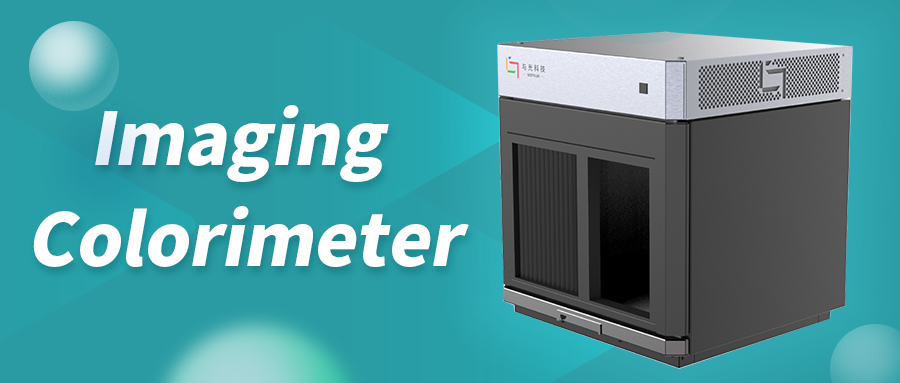



In industries such as textile dyeing, paints & coatings, and packaging printing, color is a core indicator of product quality. Common challenges including customer complaints over color difference, inaccurate visual assessment, low testing efficiency and insufficient data archiving have greatly restricted corporate development.
As a leader in computational spectroscopy, Seetrum has independently developed a domestically-produced area-array multispectral color measurement system. Powered by our self-developed snapshot spectral imaging chip and computational spectral color reconstruction algorithm, the system is tailored for diffuse reflection samples with flat surfaces, uneven hues, irregular shapes and granular textures. It can measure multiple colors and samples at 1-second intervals, featuring a large detection area, non-contact operation, high efficiency, outstanding accuracy, easy operation and excellent stability.
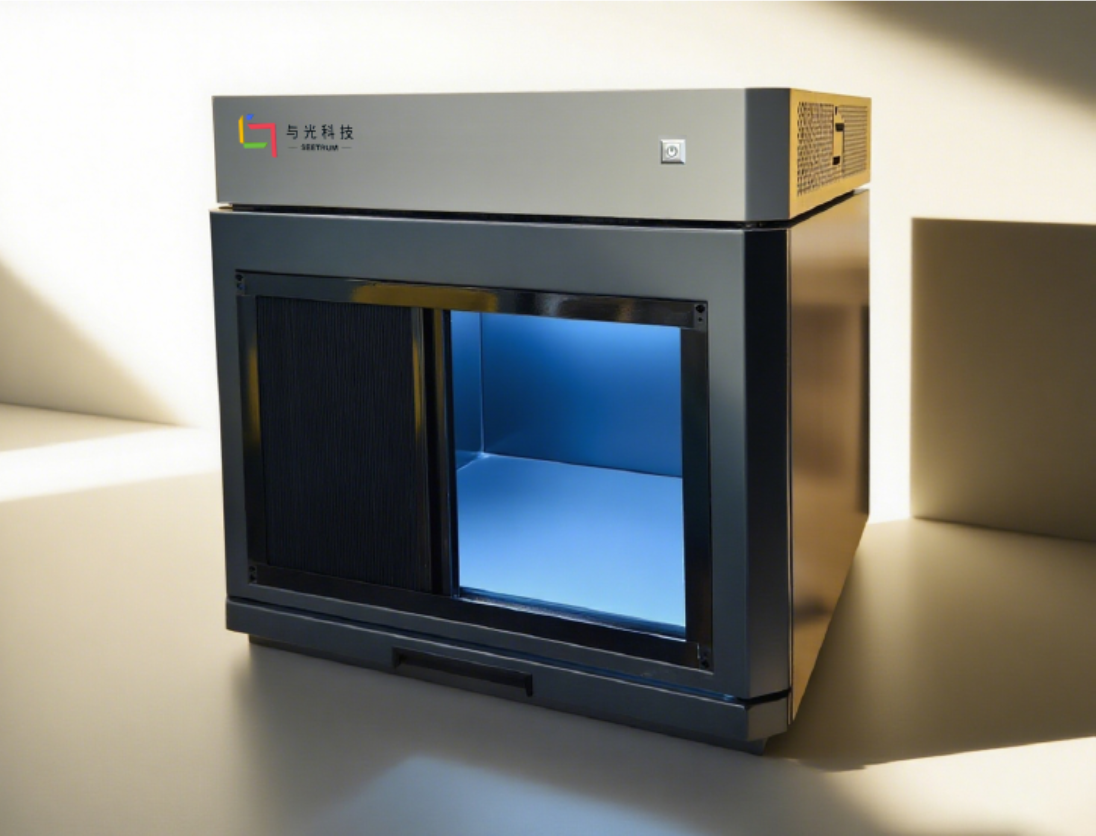
Exclusive Innovative Applications
Most traditional colorimeters adopt single-point contact measurement. When testing large-area fabrics, textured materials or products with speckled colors, single-point data cannot reflect the overall color status and may even damage sample surfaces.
Equipped with Seetrum’s self-developed Lancai® Snapshot Spectral Imaging Chip and innovative pixel-level broadband spectral modulation technology, the system captures 2D images and full-area spectral data in a single exposure. Its working principle aligns closely with human vision and effectively eliminates visual illusions. It delivers what you see is what you measure results for solid-color fabrics, patterned materials, textured stone paint, multi-color charts and food packaging.
The maximum detectable area reaches 420×340 mm, with a recommended minimum detection frame of 120×140 mm (minimum 20×20 mm). It supports simultaneous testing of up to 4 regions via non-contact detection, causing no damage to fabrics or alteration to their texture and color presentation.
Core Performance Advantages
Excellent repeatability & Consistency: repeatability ΔE00 ≤ 0.15, ΔEab ≤ 0.15, ΔLab ≤ 0.15; mid-term stability for standard color charts: ΔE00 ≤ 0.2; inter-instrument difference: ΔE00 ≤ 0.2.
Diversified data output: it generates sample photos, color deviation maps, color difference heat maps, color classification results and full color parameter data. Reports and data can be exported as tables or PDF files. Users can view real-time measurements and review historical data for further analysis.
High testing efficiency: multiple colors and samples can be measured at 1-second intervals. On average, 40 fabric samples can be tested within 3 minutes, several times faster than traditional single-point devices, perfectly matching high-volume production demands.
Low maintenance cost: based on computational spectroscopy, the system requires no complex optical paths, sophisticated optical components or mechanical scanning structures. It features high reliability and low maintenance expenses.
Full Domestic R&D & Production: entirely developed and manufactured domestically, the product boasts high cost performance. We provide customized function development and timely after-sales service with no extra high service fees.
Solve Industry Pain Points with All-in-one Color Control
1. Replace Manual Visual Inspection to Cut Costs & Boost Efficiency
Human eyes can only maintain accurate color judgment for 20 to 40 minutes. Crystalline lens yellowing after the age of 35, visual illusions and subjective differences often lead to disputes.
The system supports 24/7 continuous objective testing. Operators can get started quickly without relying on senior technicians’ experience, cutting training costs and eliminating human errors for consistent and reliable results.
2. Precisely Control Color Difference to Reduce Rework & Returns
Color deviation during dyeing, sample matching and mass production is a major cause of cost loss for manufacturers.
The system supports measurement and output of multiple color metrics including CIE1964, CIE1976, CIELAB and CIE2000. It generates color difference heat maps and color deviation diagrams, and automatically judges pass/fail results based on preset tolerances. It provides accurate guidance for color tuning, minimizing rework, customer complaints and improving product yield.
3. Enable Testing & Intelligent Classification for Complex Samples
Traditional colorimeters struggle with speckled fabrics, patterned textiles, textured stone paint and multi-color charts.
Combining multispectral imaging and regional detection technologies, the system allows users to define testing zones for targeted color measurement. It adapts well to flat diffuse samples, textured materials and multi-color products. It also realizes intelligent color tone classification and formula matching for patterned goods, filling the market gap of domestic non-contact area-array color measurement solutions.
4. Data-based Management for Digital Transformation
Breaking the dilemma of insufficient and untraceable color data in traditional workflows, the system automatically generates visual reports and supports data export to Excel. Enterprises can archive color data assets, optimize production processes, analyze defects and tap production potential, shifting color management from experience-driven to data-driven mode.
From single-point testing to area-array imaging, Seetrum area-array multispectral color measurement system stands out with cutting-edge technology, high stability and high efficiency. Powered by innovative computational spectroscopy, it redefines high-precision industrial color detection and becomes an ideal choice for modern color management.